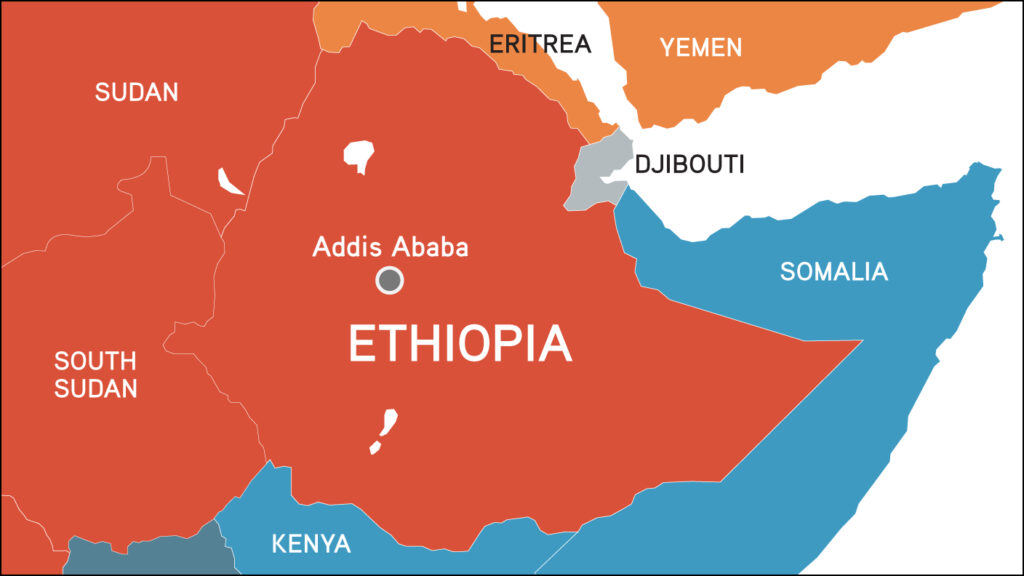
Ethiopia, located in the Horn of Africa, has emerged as one of the fastest-growing economies on the continent over the past two decades. With a population exceeding 109 million and abundant natural resources, the country has pursued an ambitious public investment-led growth strategy focused on infrastructure, agriculture, and industrialization. While this model has delivered notable progress, Ethiopia is now entering a transition phase marked by macroeconomic pressures, rising debt, and the urgent need for structural reforms.
The country has maintained relatively strong economic growth despite multiple internal and external challenges. Real GDP growth has remained steady, rising from 6.1 percent in 2019/20 to an estimated 7.3 percent in 2023/24, with projections of around 8.0 percent in 2024/25. Per capita income is gradually improving, indicating modest gains in living standards. However, inflation has remained persistently high, peaking above 30 percent before gradually declining, with expectations of stabilization in the coming years.
Growth in Ethiopia has largely been driven by large-scale infrastructure development, including roads, railways, and energy projects, alongside strong public sector investment and agricultural expansion. Industrial parks have also been introduced to promote manufacturing. Despite these efforts, the country has not yet achieved full structural transformation. The private sector remains underdeveloped, job creation in high-productivity sectors is limited, and inequalities in access to basic services persist. Additionally, high inflation and foreign exchange shortages continue to constrain economic stability.
A significant concern for Ethiopia is its rapidly growing debt. Total public debt increased from US$7.8 billion in 2007 to US$63.2 billion in 2023. External debt alone rose from US$2.3 billion to US$27.8 billion during the same period. Since 2017, the country has faced a high risk of external debt distress. Key indicators such as the debt-to-exports ratio and debt service-to-exports ratio have exceeded safe thresholds. These challenges are largely driven by delays in export-oriented projects, an overvalued exchange rate, a narrow export base, and increasing debt servicing obligations.
Ethiopia’s trade structure reveals a heavy reliance on agriculture. Approximately 79 percent of exports consist of unprocessed agricultural products, with coffee, oilseeds, flowers, and vegetables dominating export earnings. However, exports contribute only about 7.9 percent of GDP, making Ethiopia one of the lowest export-performing economies globally. The export base is narrow and lacks diversification, while logistics and trade infrastructure remain weak.
On the import side, Ethiopia depends heavily on foreign goods such as machinery, fuel, industrial inputs, and consumer products. This dependency has resulted in persistent trade deficits and a high demand for foreign currency, further intensifying foreign exchange shortages.
Sector-wise, agriculture remains the largest employer but suffers from low productivity and limited modernization. The industrial sector, particularly manufacturing, has grown slowly and has yet to become a major driver of transformation. Industrial parks exist but have not fully delivered expected results. The services sector is the fastest growing, but much of this growth is concentrated in low-productivity activities such as retail and informal services. A key structural challenge is that labour is shifting from low-productivity agriculture to similarly low-productivity services, rather than moving into manufacturing and higher-value industries.
Looking ahead, several sectors hold strong potential for future growth. Manufacturing and industrialization, particularly in textiles, garments, and agro-processing, can play a crucial role. Renewable energy is another major opportunity, given Ethiopia’s vast hydropower, solar, wind, and geothermal resources. Agriculture modernization through irrigation and value addition is essential for improving productivity. The digital economy and financial sector reforms can unlock new opportunities, while tourism remains largely untapped despite Ethiopia’s rich cultural and natural heritage.
Ethiopia also possesses several inherent advantages. Its strategic location in East Africa, large and youthful workforce, abundant water and renewable energy resources, and vast agricultural land provide a strong foundation for growth. Regional trade integration through agreements such as the African Continental Free Trade Area further enhances its potential.
However, challenges remain significant. These include persistent foreign exchange shortages, high inflation, weak export performance, rising debt risks, limited private sector participation, and political and climate-related uncertainties.
India and Ethiopia share a strong and growing economic relationship. India is one of the largest investors in Ethiopia, particularly in sectors such as textiles, agriculture, and manufacturing. Cooperation extends to infrastructure development, healthcare, education, and capacity building. This partnership reflects a broader model of South-South cooperation and offers opportunities for shared growth and development.
From a leadership perspective, Ethiopia’s journey reflects resilience and ambition. The country has made substantial progress in building infrastructure and expanding its economy, but it now faces the critical task of transitioning toward a more sustainable and diversified growth model.